










 Kontaktieren Sie uns
 Vertriebspartner suchen



Collaborative robot: Definition
The definition of a collaborative robot can best be described in one word: togetherness. While conventional industrial robots must work in isolation behind bars because any of their powerful movements would be dangerous for a human, a cobot (short for collaborative robot ) is designed from the ground up for close proximity to humans.
A collaborative robot It is equipped with highly sensitive sensors. It literally "senses" its environment. If it registers resistance – such as a gentle touch from an employee – it stops its work within milliseconds. This safety feature makes the safety fence unnecessary and transforms the machine into a true assistant that uses the same space as we do.
Why the cobot is revolutionizing the world of work
The question "What is a cobot?" can also be answered by considering its psychological benefits: It doesn't take away our work, but rather the burden. A collaborative robot takes over so-called "3D tasks":
- 🥱 D ull (monotonous & boring)
- 💨 Dirty
- ⚠️ Dangerous (dangerous or ergonomically stressful)
This frees up valuable time for employees to focus on tasks that require human creativity and problem-solving skills. Another advantage is flexibility: a cobot is usually intuitive to operate and can be quickly trained for new tasks without requiring years of computer science studies.
Practical example: The Nexaro NR 1700 as a modern cobot
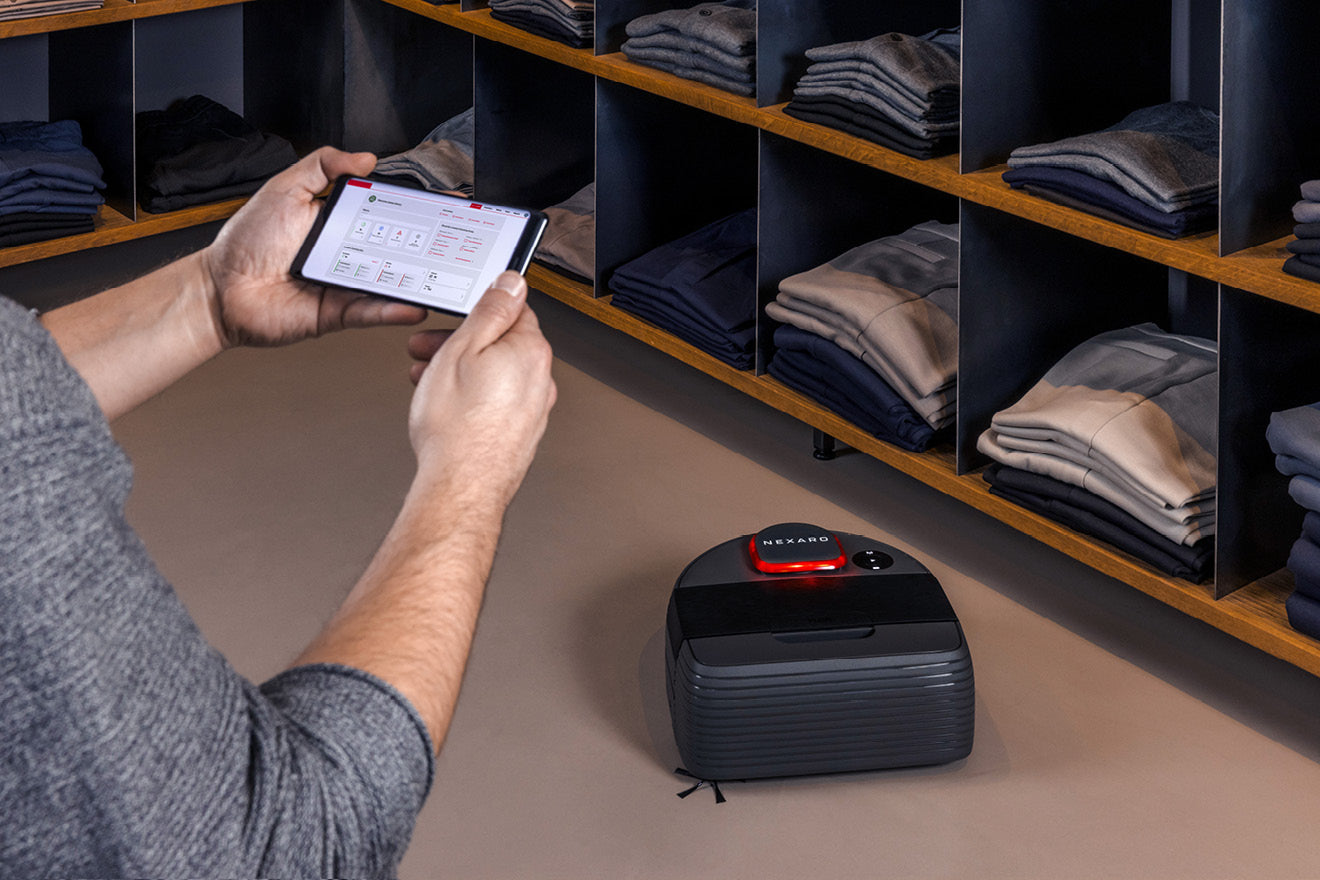
A prime example of this technology in use is the Nexaro NR 1700. In professional building cleaning, this collaborative robot demonstrates how autonomous work can function hand in hand with humans.
The Nexaro NR 1700 is not just a robot vacuum – it's a high-performance solution specifically designed for commercial use. It navigates dynamic environments with ease, precisely detects obstacles, and allows cleaning staff to focus on demanding detail work while the Nexaro NR 1700 handles the large areas. This significantly increases cleaning efficiency without replacing human staff.
The advantages: Why a collaborative robot is the right choice
When we look at how a cobot increases efficiency in companies, three points stand out in particular:
- Enormous space saving : Since no massive safety cages are needed, a system like the Nexaro NR 1700 requires hardly more space than a conventional work device.
- Rapid integration : The systems are designed to be ready for immediate use. Setup is usually done via user-friendly apps or direct training.
- Improved ergonomics : By having the collaborative robot take over strenuous tasks, the physical strain on employees is significantly reduced.
A cobot is more than just technology
A collaborative robot It's the symbol of a modern, appreciative working world. It's the answer to the skilled worker shortage and the increasing demands for cleanliness and efficiency. Whether as a precise robotic arm in assembly or as an autonomous assistant like the Nexaro NR 1700 – the boundary between human and machine is disappearing in favor of a strong, productive team.
