










 Kontaktieren Sie uns
 Vertriebspartner suchen


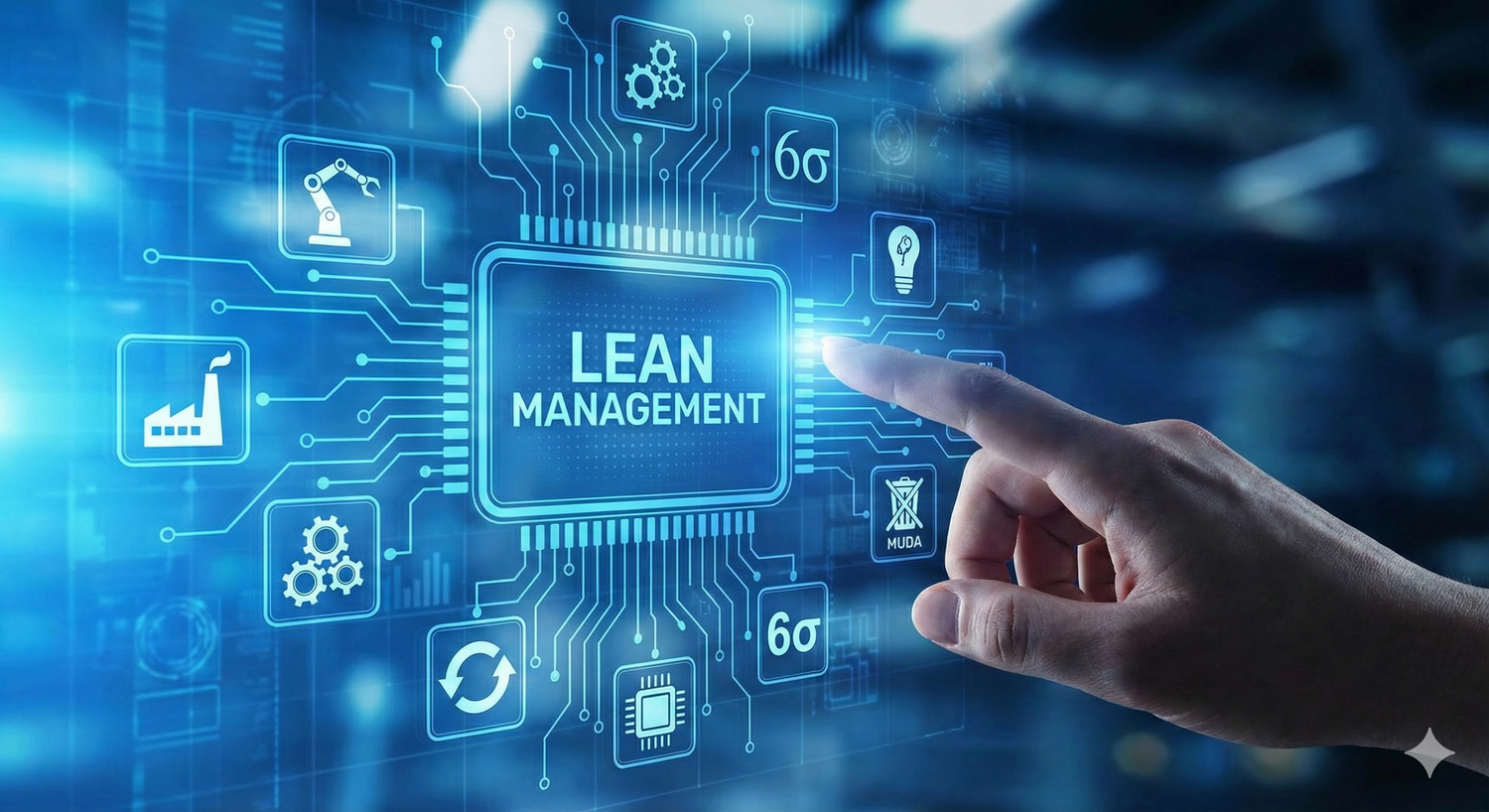
In today's working world, efficiency is no longer just a bonus, but a basic requirement for competitiveness. Nevertheless, many companies have processes that tie up valuable resources without generating any added value for customers. This is where lean management comes in.
In this article, you will learn how to identify waste and establish a lean, value-oriented corporate culture using targeted methods.
What is lean management?
The question ‘What is lean management?’ can best be defined by its goal: it is about creating value without waste. Originally derived from the Toyota production system, the approach has long since spread to all industries – from logistics to administration.
At its core, lean management is based on two pillars:
- Consistent customer focus: Anything that the customer is not willing to pay for is considered superfluous.
- Continuous improvement (Kaizen): The search for optimisation potential never ends.
Harmonising all processes improves the flow within the company, which shortens throughput times and increases quality.
The 7 types of waste (Muda)
In order to successfully implement lean management, you first have to learn to see waste. In technical jargon, this is often referred to as ‘Muda’. Classically, a distinction is made between seven types:
- Overproduction: More is produced than is currently needed.
- Inventory: Excessive inventory ties up capital and space.
- Transport: Unnecessary movement of materials or information.
- Waiting times: Downtime for employees or machines due to a lack of input.
- Complex processes: Complicated procedures that do not bring any direct benefit.
- Movement: Ergonomically unfavourable or unnecessary movements in the workplace.
- Errors: Rework and rejects cause high costs.
Modern approaches often add an eighth point to this list: unused talent. If the knowledge and creativity of employees are not utilised, this is a serious form of waste.
Proven lean management methods in use
There are a variety of tools for nipping waste in the bud. Among the most effective approaches are:
- The 5S method focuses on workplace design through sorting, systematising, cleaning, standardising and self-discipline. The goal is to create an environment in which search times are eliminated.
- Value stream mapping is used to visualise the entire value stream. This allows bottlenecks and non-value-adding steps to be identified precisely.
- Kanban establishes a pull system that controls the flow of materials according to demand, thus preventing overproduction.
- Poka Yoke relies on technical precautions to prevent errors, supporting the zero-error principle with simple but effective solutions.
Lean management in cleaning and facility management
Lean management offers enormous leverage, especially in labour-intensive industries such as commercial cleaning. Long walking distances, inefficient work schedules or inadequate equipment quickly lead to high costs in this sector.
Many of these potential sources of waste can be eliminated through the use of autonomous technologies and smart software solutions. For example, cleaning cycles can be controlled according to demand instead of following rigid, inefficient schedules. Learn more about modern approaches and industry news in our news section, where we regularly report on the future of efficient building cleaning.
Lean processes as a lasting competitive advantage
Lean management is not a project with a fixed end date, but a mindset. Eliminating waste creates room for innovation and increases customer and employee satisfaction alike. The path to a lean organisation often begins with small steps – such as optimising a single workplace – and gradually develops into a system that questions itself and continuously improves.
